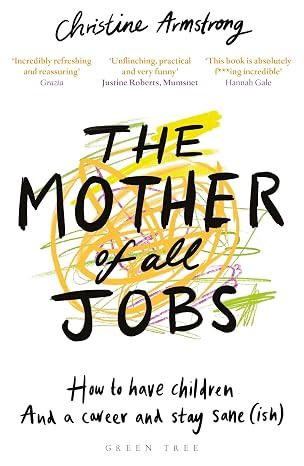
The Mother of All Jobs
Christine Armstrong
The Mother of All Jobs begins with an uncomfortable truth: modern work has become more demanding, but the structures surrounding childcare, schools and family life have not evolved at the same pace.
Christine Armstrong examines what happens when parents—particularly mothers—attempt to meet both sets of expectations while pretending everything is under control.
Drawing on the experiences of many women, Armstrong explores returning to work, loss of identity, guilt, relationships, different couple dynamics, solo parenting, school life and the experiences of fathers. The breadth of perspectives makes the book reassuring: whatever version of the struggle you are experiencing, someone else has probably experienced it too.
The book is honest about the pressure placed on mothers, but it does not reduce the issue to poor personal organisation. Better routines may help, but they cannot completely resolve inflexible workplaces, unequal household responsibilities or childcare systems that do not match working hours. This distinction matters. Parents do not need another book implying that everything would work perfectly if only they became more efficient.
A particularly thoughtful feature is the concise summary at the end of each chapter. It makes the book easy to read in short bursts and simple to return to later—exactly the kind of design busy parents need.
The tone can sometimes feel sobering, but it is also validating, compassionate and frequently funny.
The Working Parenthood perspective
This book reinforces two ideas at the heart of Working Parenthood: families need realistic systems, and there is no single correct model.
Armstrong’s collection of experiences allows us to treat other families’ lives as case studies—not standards against which to judge ourselves, but sources of ideas.
The chapter summaries also respect the reality that the people who most need this book may have the least uninterrupted time to read it.